
The Wallet Takes a Hit: How Trump’s Tariffs Inflated Your Hot Wheels Habit
Well, fellow collectors and auto enthusiasts, today we’re diving into a topic that’s likely made more than a few of us wince at the checkout counter: the rising prices of our beloved diecast cars, particularly Hot Wheels, and the role those pesky tariffs from the Trump era seem to have played. If you’ve noticed your diecast budget stretching thinner, you’re not alone. It’s a good time to keep an eye out for deals, and you can often find a wide selection of Hot Wheels, from mainlines to premiums, on eBay if local store shelves are looking sparse or overpriced.
It’s no secret that prices for many goods have been on an upward trajectory, but the diecast aisle, a place many of us escape to for a hit of nostalgia or the thrill of the hunt, hasn’t been immune. The conversation around tariffs, specifically those imposed on Chinese goods during the Trump administration, has been a hot topic, and the ripple effects are still being felt on our tiny, wheeled treasures.
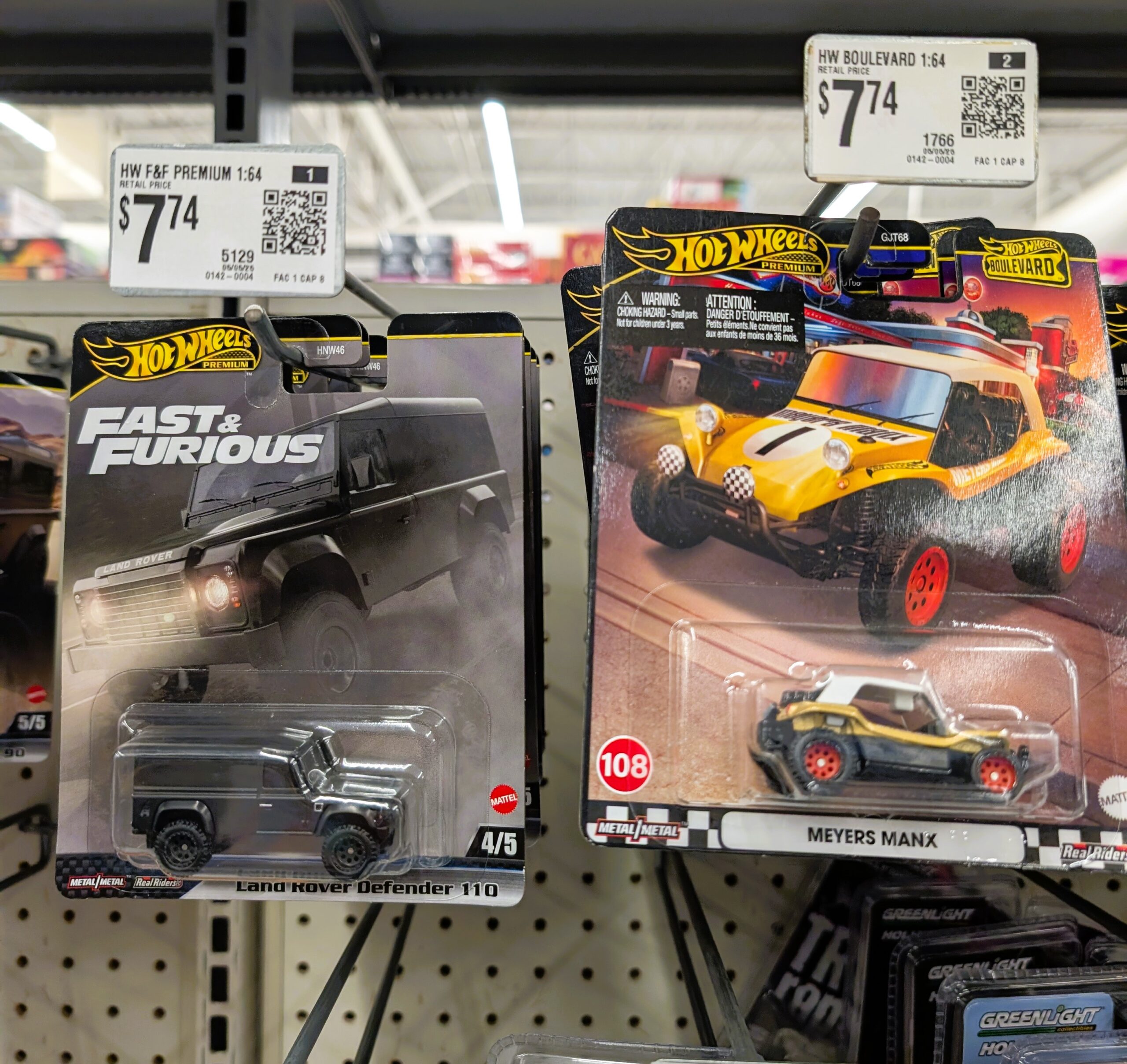
Hot Wheels Premiums (Gold Series) have increased from $6.47 to $7.74 at Wal-Mart
More Than Just Mainlines: A Broader Look at Price Hikes
As a collector who grew up in the ’80s and ’90s, I remember when Hot Wheels mainlines were comfortably under a dollar. Finding that perfect casting felt like a steal. Fast forward to recent times, and as of mid-2025, we’ve seen those mainline prices creep from around $0.94 to $1.18, and now commonly sit at $1.25 at many Walmarts and even $1.29 at retailers like Target. If you’re grabbing them at a local drug store or supermarket, don’t be surprised to see prices ranging from $1.39 to over $2.00!
But the financial squeeze isn’t limited to single basic cars. The more substantial ouch-factor for many collectors has been in the premium lines. Those beautiful Hot Wheels Car Culture, Boulevard, and Retro Entertainment series, with their metal bases, Real Riders, and detailed tampos, have seen a significant jump. For instance, at many Walmart stores, these premiums have climbed from a more palatable $6.49 to a rather steep $7.74. I can personally attest to the slight hesitation I now feel before grabbing a full set.
The popular Team Transports haven’t escaped either. Once hovering around the $12.99 to $14.99 mark, they are now frequently priced at $17.99 or even $18 at major retailers. I did see some collector chatter about select Walmart stores having a “rollback” to $13.97 on certain Transports, likely to move older or less popular stock, but the general trend is undeniably upward. For context, a set of three Team Transports can now easily set you back close to $60 with tax.
Even multi-packs, often a go-to for getting a quick Hot Wheels fix or for kids’ collections, have seen increases. Hot Wheels 5-packs, a long-time staple, have gone from around $5 to $5.29 to now being regularly found at $5.69 at Target and a similar price on Amazon (sometimes listed higher but discounted). Monster Trucks singles (1:64 scale) are now typically $3.89 at Target, with their Demolition Doubles 2-packs hitting $7.49. If you’re eyeing a Monster Trucks 5-pack, that could be around $19.19. Even Color Reveal 2-packs are fetching about $7.99. Looking at larger sets, Amazon shows 10-packs around $13.99 and 20-packs in the $25 range. These aren’t massive leaps individually, but across the board, it’s clear the days of sub-$1 mainlines and $5 premiums are long gone.
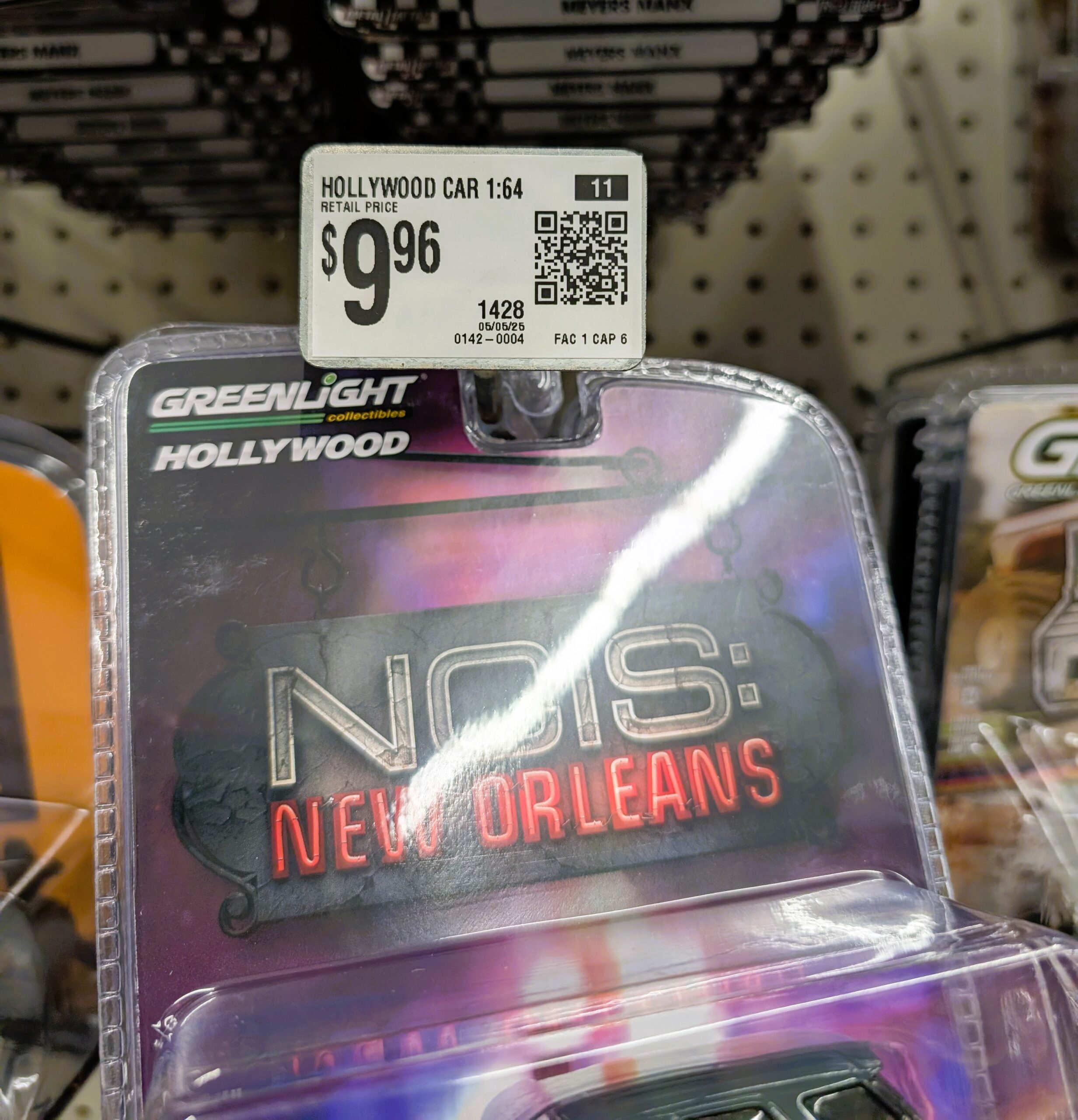
Greenlight Hollywood Series almost doubled in price overnight to $9.96.
So, what’s the connection to the tariffs? Well, reports from early to mid-2025 confirmed that major toy manufacturers, including Mattel (the parent company of Hot Wheels), explicitly stated they would be raising prices to offset the costs incurred from tariffs imposed on goods manufactured in China. Given that a colossal 80% of toys sold in the U.S. are made in China, the toy industry was squarely in the crosshairs. Companies like Lionel, known for their NASCAR diecast, also announced tariff-related surcharges. Some of these tariffs were alarmingly high, with figures like 145% being cited in news reports, although there were periods of temporary reductions.
Collector Chatter and Economic Reality
The sentiment among collectors on forums and social media has been a mix of frustration and resignation. Many savvy enthusiasts quickly pointed out that these import duties, while politically framed in various ways, ultimately translate into a tax paid by U.S. consumers. The diecast companies weren’t just going to absorb these massive new costs; they were inevitably going to pass them along to us, the end buyers. There was widespread speculation, which seems to have panned out, that prices could rise by 25-35% or even more on certain items.
From my perspective, as someone who believes in the principles of free markets and free trade, these tariffs felt like an unnecessary burden on consumers. While the stated goals might have been to bolster domestic manufacturing or address trade imbalances, the immediate and tangible effect for hobbyists was simply paying more for the same products. It’s a classic case of economic cause and effect – raise the cost of importing, and the price on the shelf will follow.
I remember the late 90s when I started Hallsguide as a price guide. The market was different, influenced more by scarcity and collector demand than by overarching trade policies. A Treasure Hunt was valuable because it was hard to find, not because import taxes made all cars pricier. It’s also worth noting that even Mattel’s direct-to-consumer Red Line Club (RLC) exclusives have seen price increases, which, while sometimes attributed by collectors to simple inflation or “money grabs,” also happen in the larger context of rising production, material, and shipping costs – all of which can be exacerbated by tariffs impacting the supply chain.
Beyond the Pegs: The Broader Impact
Mattel and other toy giants did announce plans to diversify their manufacturing bases, moving some production out of China to other countries to mitigate the tariff impact. However, such shifts take time and investment, and in the interim, price adjustments were deemed necessary. Even with these moves, Mattel executives noted that a significant portion of their production remained in China.
The conversation also touches on the secondary market. Will higher retail prices for new diecast drive up the value of older, pre-tariff era cars? It’s possible. If acquiring new models becomes significantly more expensive, collectors might turn their attention and budgets to filling gaps in their collections with older pieces, potentially increasing demand and prices for those. However, it could also have a chilling effect, with collectors buying less overall due to budget constraints.
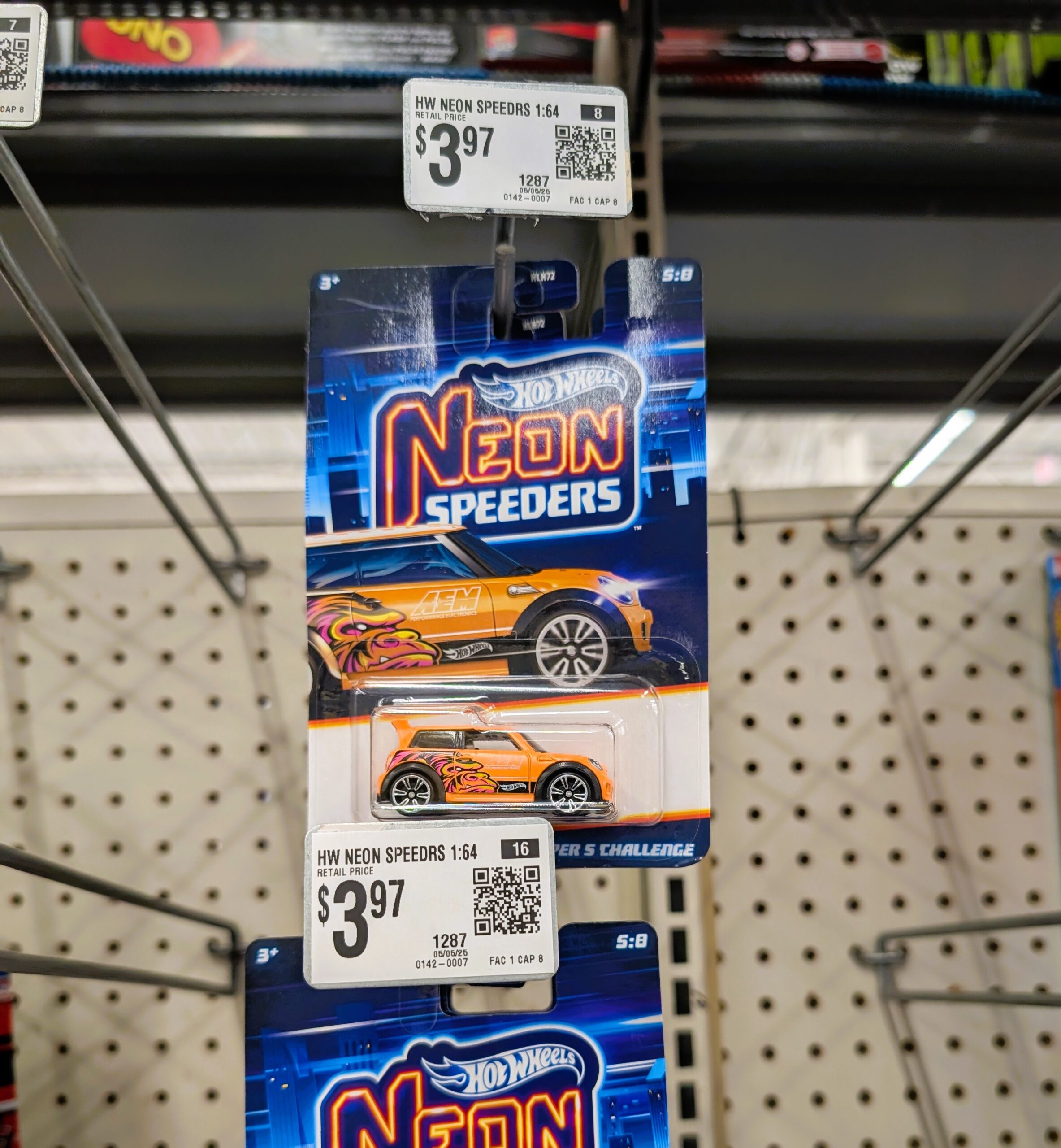
Hot Wheels Neon Speeders (Silver Series) has increased to $3.97 at Wal-Mart.
One has to wonder if the slightly higher price point on mainlines, for example, might make some of the less “hot” castings linger on the pegs longer, potentially leading to retailers being more cautious with orders. For premium lines, the jump to nearly $8 a car, and Team Transports pushing towards $20, could make casual buyers think twice, reserving purchases for only their absolute favorite models.
Looking Ahead: Are We Stuck in High Gear on Prices?
While the specific “Trump tariffs” were a distinct policy phase, their impact has helped set a new baseline for pricing in many industries, including ours. Companies have adjusted their cost structures, and it’s often harder for prices to come down than it is for them to go up.
As collectors, we adapt. We become more selective, we hunt harder for deals, and maybe we trade a bit more. But it’s hard not to feel a twinge of disappointment when a simple pleasure like picking up a few Hot Wheels starts to feel noticeably more expensive due to policies enacted far away from the toy aisle.
I’ll keep my eyes on the trends and report back on what I see. For now, happy hunting, and may your diecast finds still bring you joy, even if they cost a few more cents (or dollars) than they used to.