Model Cars


LEAKED: The Most Aggressive Kaido House Yet is… Grassroots?

Hold onto your lug nuts, JDM fanboys and stance aficionados, because Jun Imai has just upended the diecast world—again. We’ve seen the slammed Datsun 510s, the wide-body Skylines, and the aggressive Chevy haulers, but nothing, and I mean nothing, could have prepared us for this latest drop from the Kaido House stable. Forget “Pro Street.” Forget “Garage.” It’s time to talk about “Pro-Lawn.”

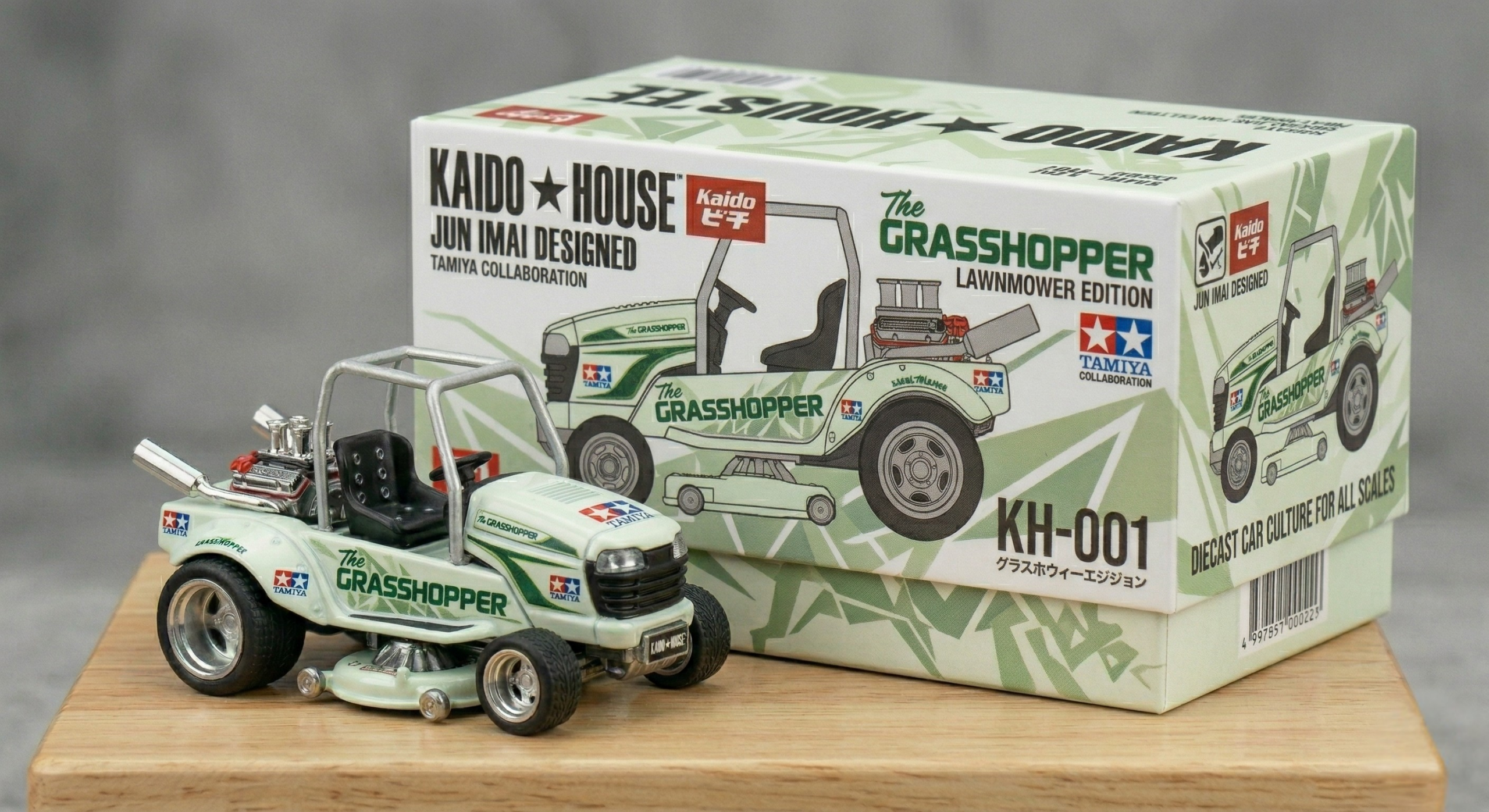
In what can only be described as a work of absolute, unadulterated genius (or maybe just the result of a very long, very hot Japanese summer afternoon), Kaido House, in an unprecedented Tamiya Collaboration, has unveiled the KH-001: The Grasshopper Lawnmower Edition. And yes, my fellow plastic-protecting, error-hunting zealots, it is everything we didn’t know we needed.

I know what you’re thinking. A lawnmower? Really? But this isn’t just any lawnmower. This is the Kaido House interpretation of a lawnmower, which means it has a stance that would make a lowrider weep and enough custom fabrication to stock a real-world speed shop. For those of us who grew up wishing we could drive the actual Tamiya Grasshopper buggy, this is the ultimate act of diecast closure.
Kaido House Grasshopper Lawn Mower

Kaido House Grasshopper Lawn Mower

The Details (And the Stance)

Let’s talk specs, because this thing is packed with more details than a case of Real Riders with guaranteed chase pieces.

First, let’s address the elephant in the diorama: the ride height. The Grasshopper Lawnmower has a “slammed” stance that is so low, it might actually scalp your Bermuda grass rather than cut it. The wheels are custom, deep-dish bronze mags that are so wide they barely fit under the fabbed fender flares. The front wheels are tiny, the rears massive, giving it that classic drag-mower rake we’ve all been dreaming of.

But the real piece de resistance is the engine. Tucked where the humble single-cylinder Kohler usually sits is a chrome-plated, multi-stack V8 with velocity stacks poking proudly into the air. This mower isn’t built to cut grass; it’s built to cut laps. The side-mounted exhaust is a chrome “stinger” pipe that curves up past the rear fender, and I can only assume it emits a sound like a swarm of very angry, high-octane hornets.

The body is a high-gloss, metallic green—perfectly matching the Tamiya vibe—and it’s covered in those authentic “The GRASSHOPPER” and Tamiya star logos. Even the seat is a custom black bucket racing seat. There’s even a functional-looking roll cage, because you never know when you’re going to get too aggressive with your edging.

Mowing Over the Competition

This model is a perfect example of Jun Imai’s clipping edge creativity. He took a mundane, everyday tool and turned it into a cultural icon. The sheer audacity of it makes me want to scream “Take my money!” at the screen. The detailing on the undercarriage rotary deck alone has more effort put into it than most brands’ entire castings. It’s clear that Kaido House didn’t hedge their bets with this one; they went all-in.

For collectors, this is a must-have. It’s a guaranteed field day for the community. The mulch-awaited Tamiya connection makes it a multi-generational appeal. But the real joy is the meta-commentary. It’s a joke, sure, but it’s a Kaido joke, which means it’s made with love and precision.

The Raw Chase: Making Us Green with Envy

And because Kaido House knows how to push our collector buttons, there’s a chase. Of course there’s a chase.

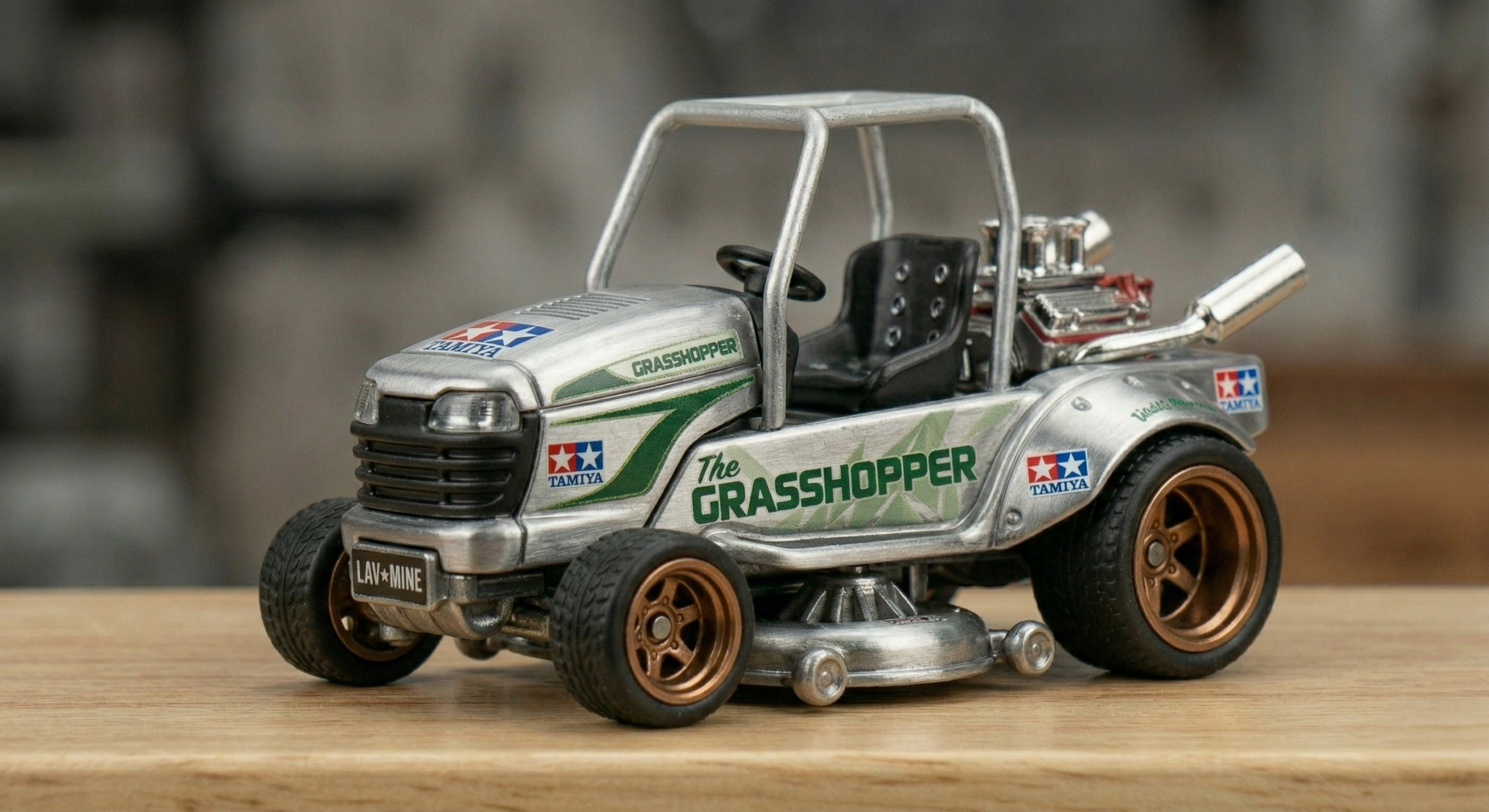
I’ve had the unique privilege of seeing a leaked image of the raw zamac version. It dispenses with the metallic green and the Tamiya livery, showcasing the raw, unpainted metal body, the detailed V8, and, get this… it keeps the bronze wheels. It is brutalist, industrial perfection. It’s the kind of piece that says, “I don’t just protect my plastic; I harvest it.” If you find one of these in the wild, you won’t just be happy; you’ll be overjoyed.
Kaido House Grasshopper Lawn Mower Chase

Kaido House Grasshopper Lawn Mower Chase

Cutting Through the Hype

Let’s be real for a moment. This is a 1:64 scale lawnmower. It won’t help you with your yard work. It will just sit in its acrylic display case, mocking your actual chores. But that’s the beauty of it. It’s absurd, it’s high-quality, and it’s a brilliant parody of the diecast culture itself. The KH-001 “Grasshopper” Lawnmower is the first collectible that lets you edgy into the world of Japanese landscaping.

So, get ready for the drop. Prepare for the server crashes. And when you finally hold this miniature miracle in your hands, take a moment to appreciate the genius of Jun Imai. He didn’t just mow over our expectations; he cultivated a new one.

This is a Hallsguide Special Edition alert. Don’t get left in the dust. This is one drop you can’t afford to turf.


Climbing the Peaks: The 2026 Hot Wheels Summit Surge Silver Series

Since I started Hallsguide back in 1998, I have seen a lot of “Silver Series” sets come and go. These sets occupy that specific middle ground for collectors: more detail than your standard $1.25 mainline, but without the $6.50+ price tag (and rubber tires) of the Premium lines. At a retail price of around $4, the 2026 Summit Surge series offers a solid value proposition for those who appreciate clean tampos and thematic card art.

This set features five vehicles seemingly tackling a steep mountain pass, and while none of these are likely to be “peg warmers” or “instant grails,” they represent a nice slice of automotive history. If you miss them at your local big-box store, you can usually track them down through related eBay searches for Hot Wheels Silver Series sets to fill those gaps in your collection. Let’s break down each casting in this five-car climb.


1/5: Ford Performance Supervan 4

The first car in the set is a modern electric marvel. The Ford Performance Supervan 4 (specifically the 4.2 iteration seen here) is a 1,972-horsepower beast that debuted in the real world to conquer the Pikes Peak International Hill Climb. It features four electric motors and can hit 60 mph in less than two seconds.

In terms of the Hot Wheels casting, this version comes in a striking green with “Ford Pro” livery. It’s a relatively new casting, having debuted in 2024, and it perfectly fits the “Summit” theme. While it’s a van, its performance specs put most supercars to shame. I don’t expect this one to skyrocket in value, but it is a must-have for Ford enthusiasts.

2/5: McLaren Speedtail

The McLaren Speedtail is what the brand calls a “Hyper GT.” For those of us who grew up in the 90s, this is the spiritual successor to the legendary McLaren F1. Just like the original, the Speedtail features a central driving position, though that’s hard to see through the tinted plastic of a 1:64 scale car!

The real-life version is limited to just 106 units and can reach a top speed of 250 mph. This Hot Wheels version, originally designed by the late, great Ryu Asada, looks exceptionally sleek in this blue finish. It’s a “slippery” car designed for maximum aerodynamic efficiency, making it a favorite for collectors who love modern exotics.

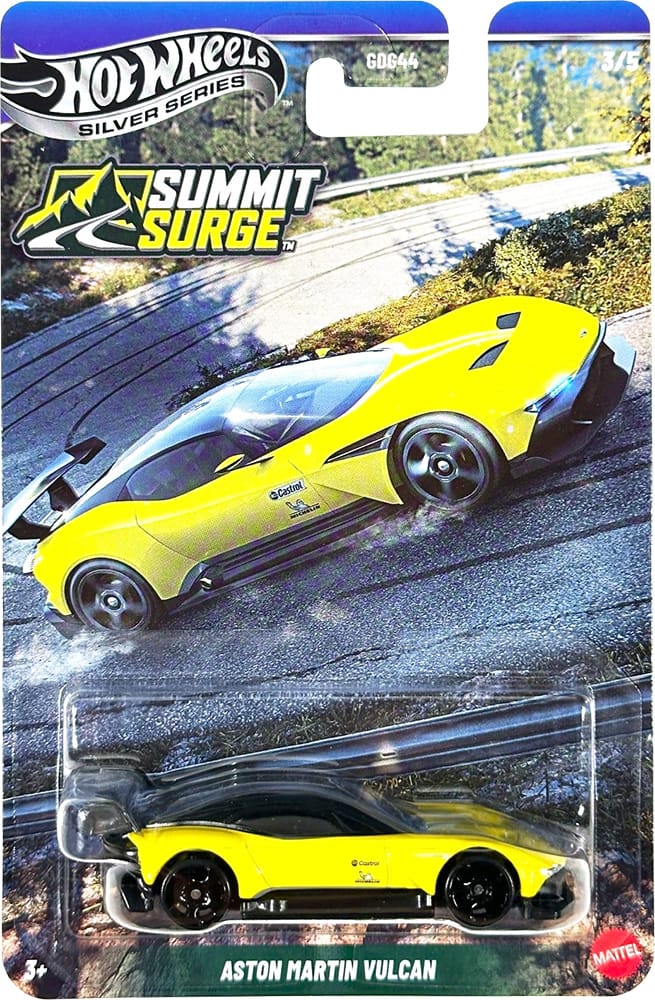
3/5: Aston Martin Vulcan

Next up is the Aston Martin Vulcan, a track-only V12 monster. When Aston Martin built these in 2015, they only made 24—one for every hour of the 24 Hours of Le Mans. With 820 horsepower and a $2.3 million price tag, it’s a car most of us will only ever drive in a video game or push across a desk.

The Hot Wheels casting has been around since 2019, and while we’ve seen several colorways, this yellow version with Castrol and Michelin logos feels right at home in a racing-themed set. It’s a “loud” car, both in person and on the card art, and should hold its own as a solid $4 pick-up.

4/5: Jaguar MK1

The Jaguar MK1 brings some vintage British class to the mountain road. Produced from 1955 to 1959, the MK1 was the car that established Jaguar’s “Grace, Space, and Pace” slogan. Interestingly, it was a favorite of both the British police and the bank robbers they chased, because it was simply faster than most other sedans of the era.

This matte black version features “55” racing numbers and a Castrol logo, paying homage to the race-spec versions frequently seen in historic racing events like Goodwood. It’s a newer casting that first appeared in the 2024 Race Day series, and it provides a nice historical contrast to the high-tech hypercars in the rest of the set.

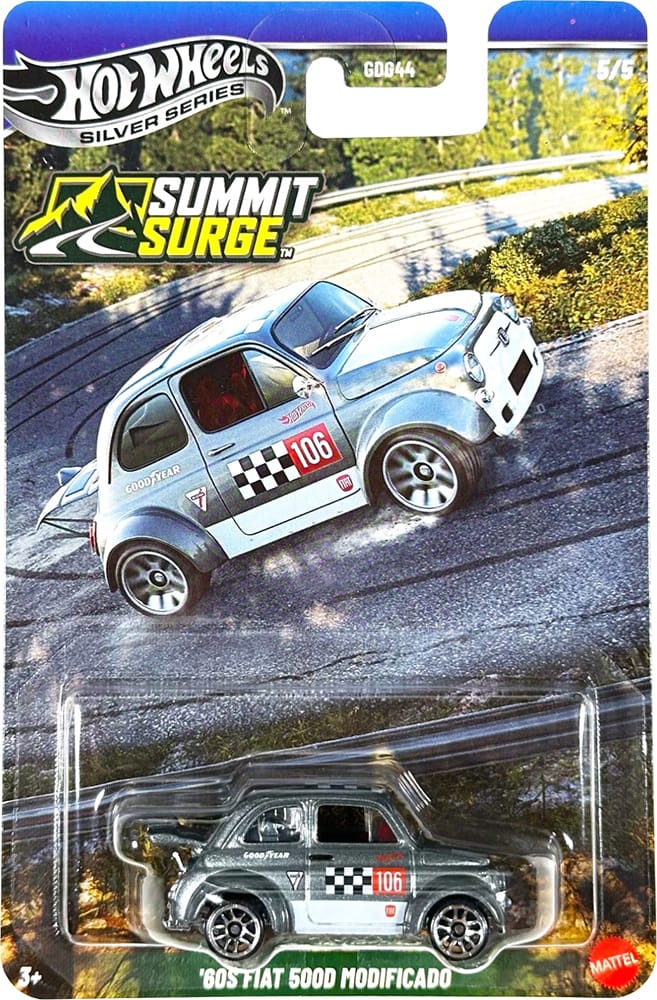
5/5: ’60s Fiat 500D Modificado

Finally, we have the ’60s Fiat 500D Modificado. This is arguably the most charming car in the bunch. Despite being named the “500D,” the casting is actually based on the 1965–1972 500F (the “D” model had suicide doors, which this casting lacks). The “Modificado” part refers to its racing modifications: a lowered stance, wide fenders, and that iconic propped-open rear engine cover used for cooling.

The Metalflake Gray paint and “106” racing livery give it a serious look for such a tiny car. It represents the era of European “pocket rockets” that thrived on tight, winding mountain roads where agility mattered more than raw horsepower.


Final Thoughts and Market Outlook

At $4 a pop, the Summit Surge set is an affordable way to add some variety to your display. I don’t anticipate any of these hitting the $15–$20 range anytime soon; they are more likely to settle into the $5 to $6 range on the secondary market once they leave the pegs. The real value here is for the “set completer”—the collector who realizes three years from now that they are missing the MK1 or the Supervan to finish their 2026 Silver Label run.

In my 28 years of tracking these, I’ve noticed that these “mid-tier” sets often become harder to find in mint condition later on because they aren’t hoarded as heavily as the Premiums. My advice? Grab the ones you like now, and if you’re a completionist, don’t wait too long to snag the whole set.